An Interactive Space for Connection
An immersive installation that visually and sonically responds to human interaction, encouraging emotional connection.
Challenge
Our task was to make an interactive environment with proximity as the topic. We had to build something from scratch where technology fosters connection and creates shared experiences in a physical space.
Results
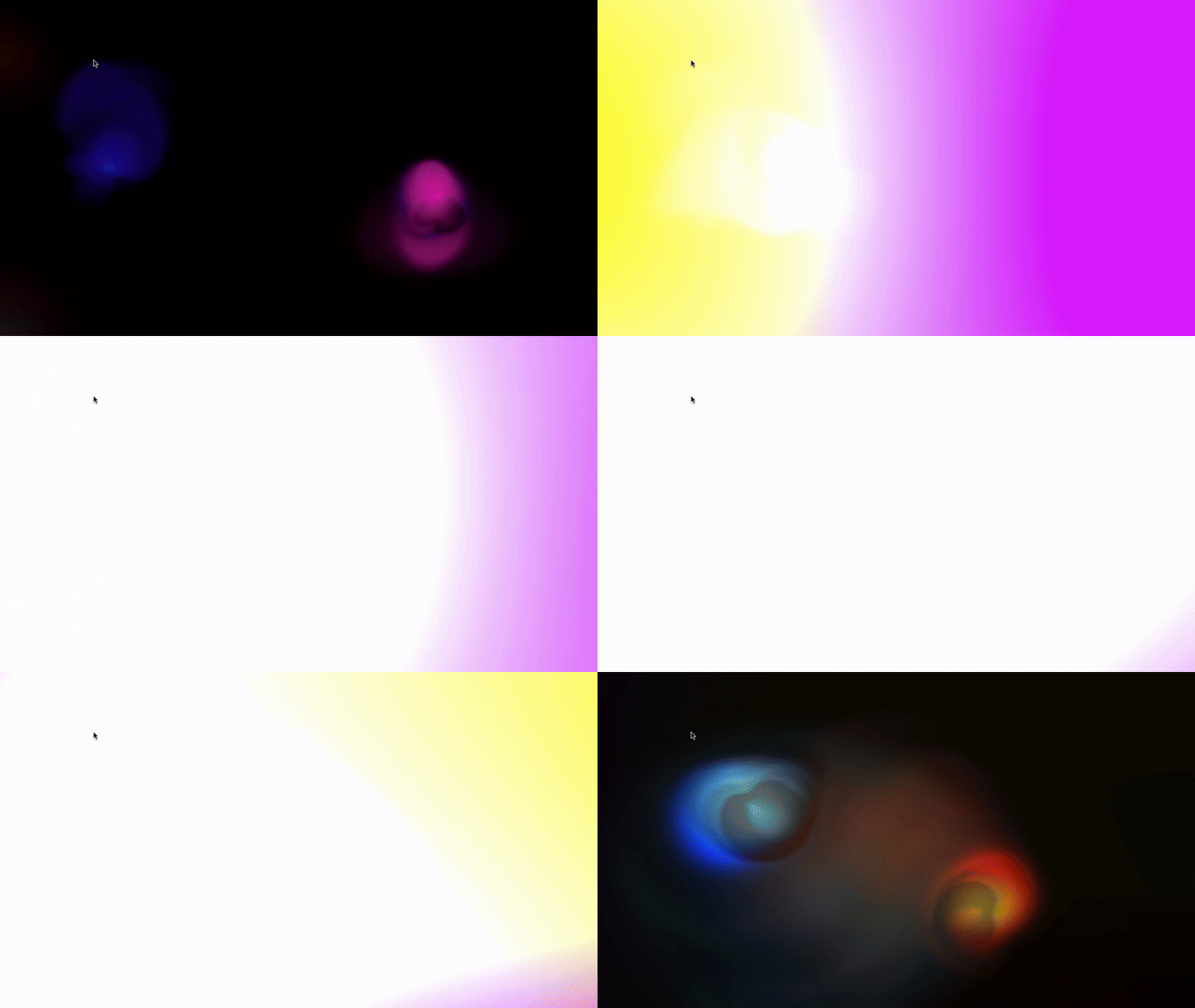
We had many ideas with full-body tracking, but with limited technology we had to regroup and rethink. The result is impressive: hand tracking, collision, colour changes and sound effects.
Ideation
Our first brainstorming focused on abstract ways to connect people through their movements and visual changes based on proximity.
We imagined a white space where the floor becomes art. The path someone takes is projected on the floor: every person is a blob that leaves a trail behind. Colours and distance change the "art", and different shapes, lines and colours connect people.
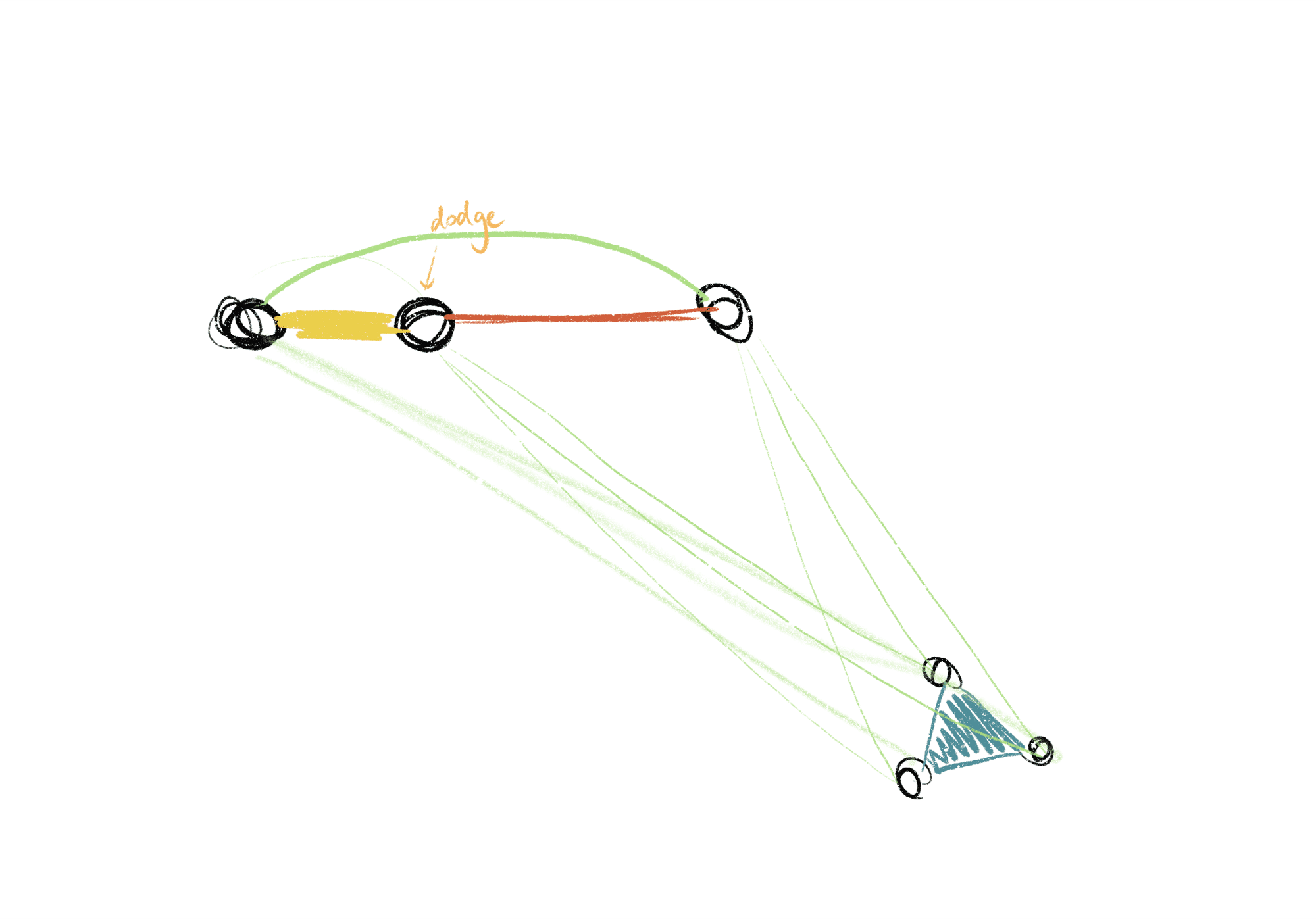
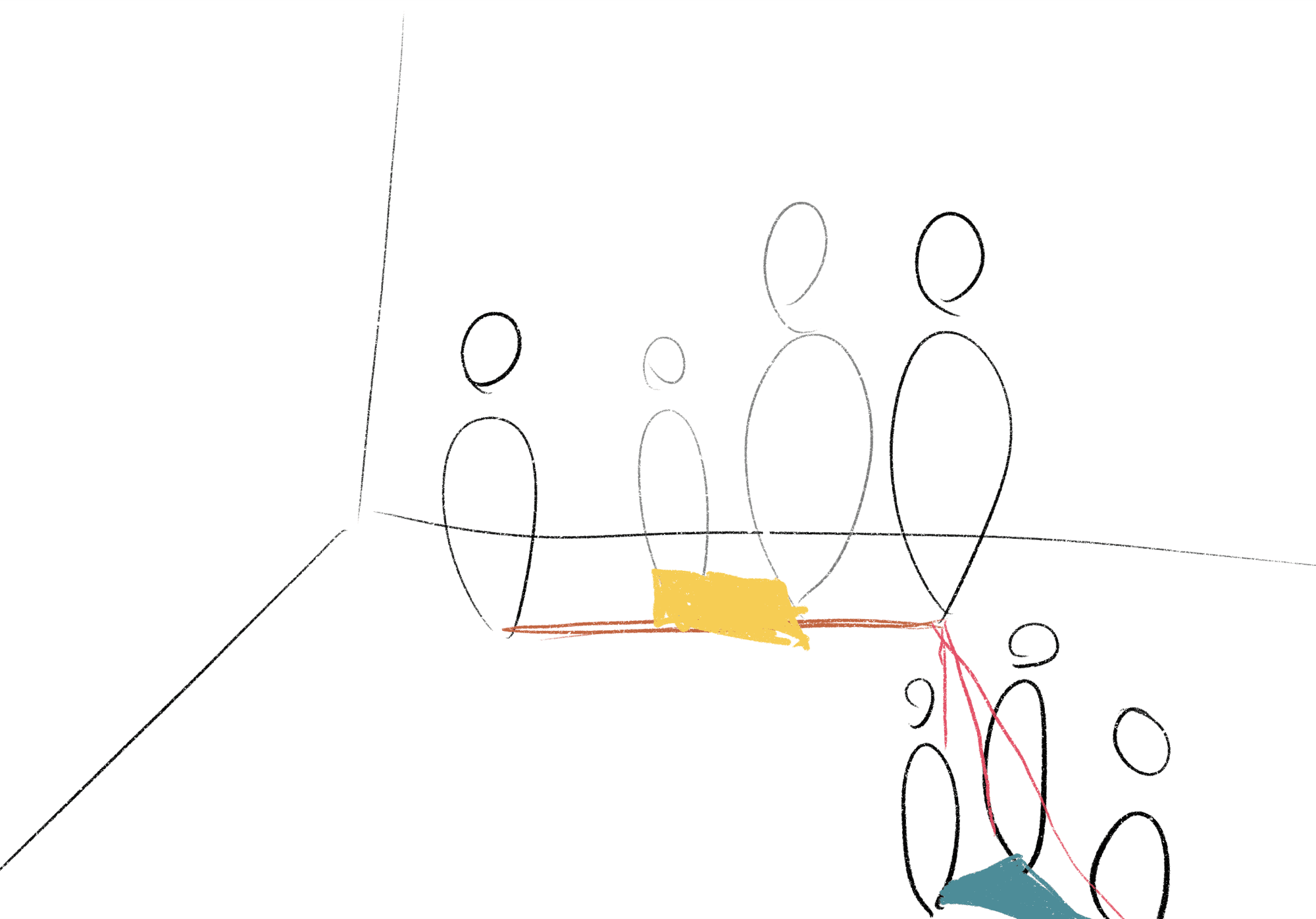
Storyboard and installation plans
We developed the idea further into one that uses the whole space:
- FloorShows the current path of each person.
- Left wall: the pastEveryone who came and interacted is projected on this wall.
- Right wall: the futureCurrent visitors see different options for interaction.
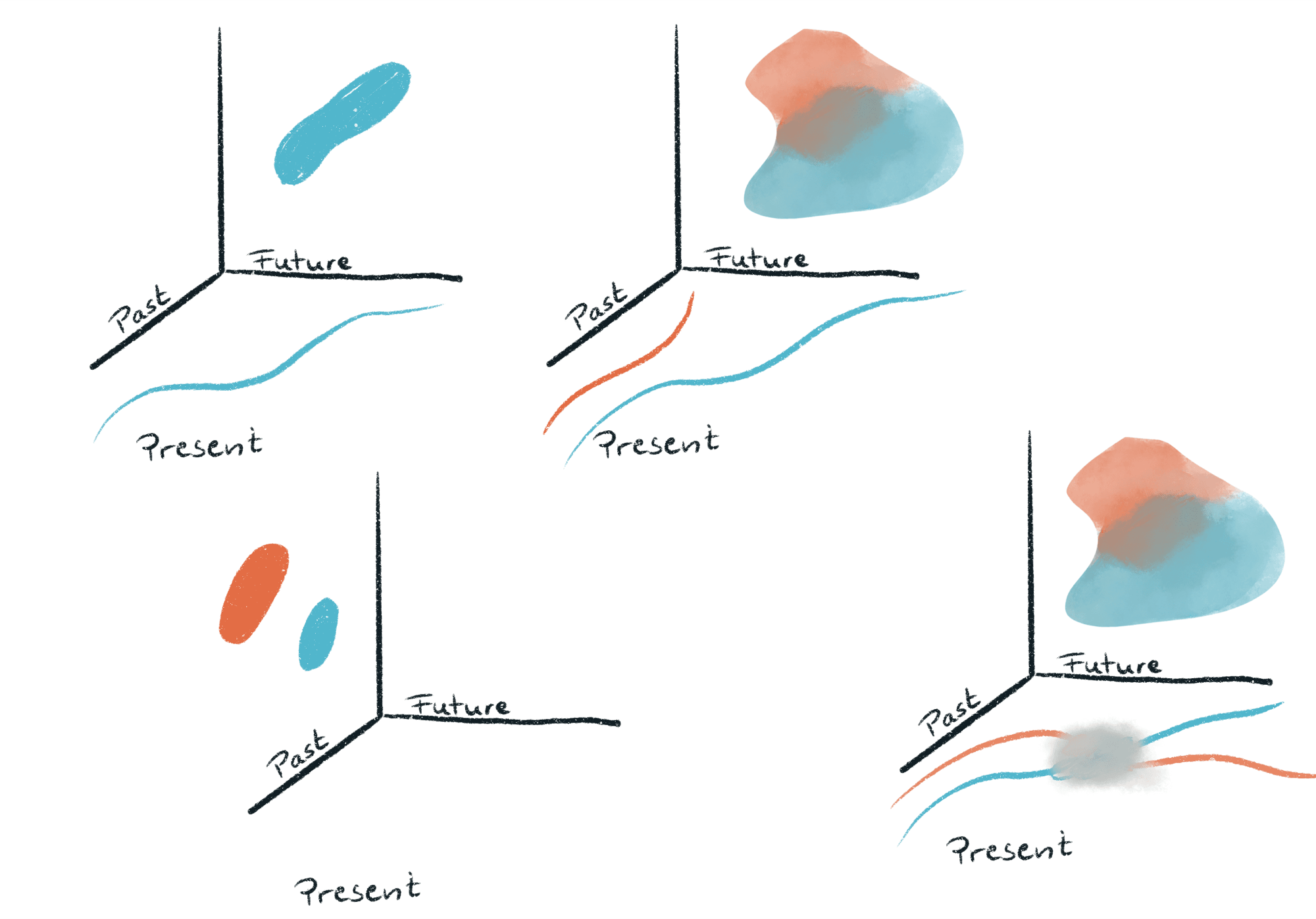
The different scenarios
- AloneThe first person generates a colour blob with a trail on the floor. They are alone in the future, and there is nothing in the past yet.
- Distant pairTwo people never interact. The future shows a possible interaction by fusing their two colours. After they leave, the past shows two blobs not touching.
- Close interactionPeople interact and their trails fuse. The future shows different ratios of connection, and the past shows blobs interacting with each other.
- The futureAs more and more people come to the space, the past becomes more and more colourful.
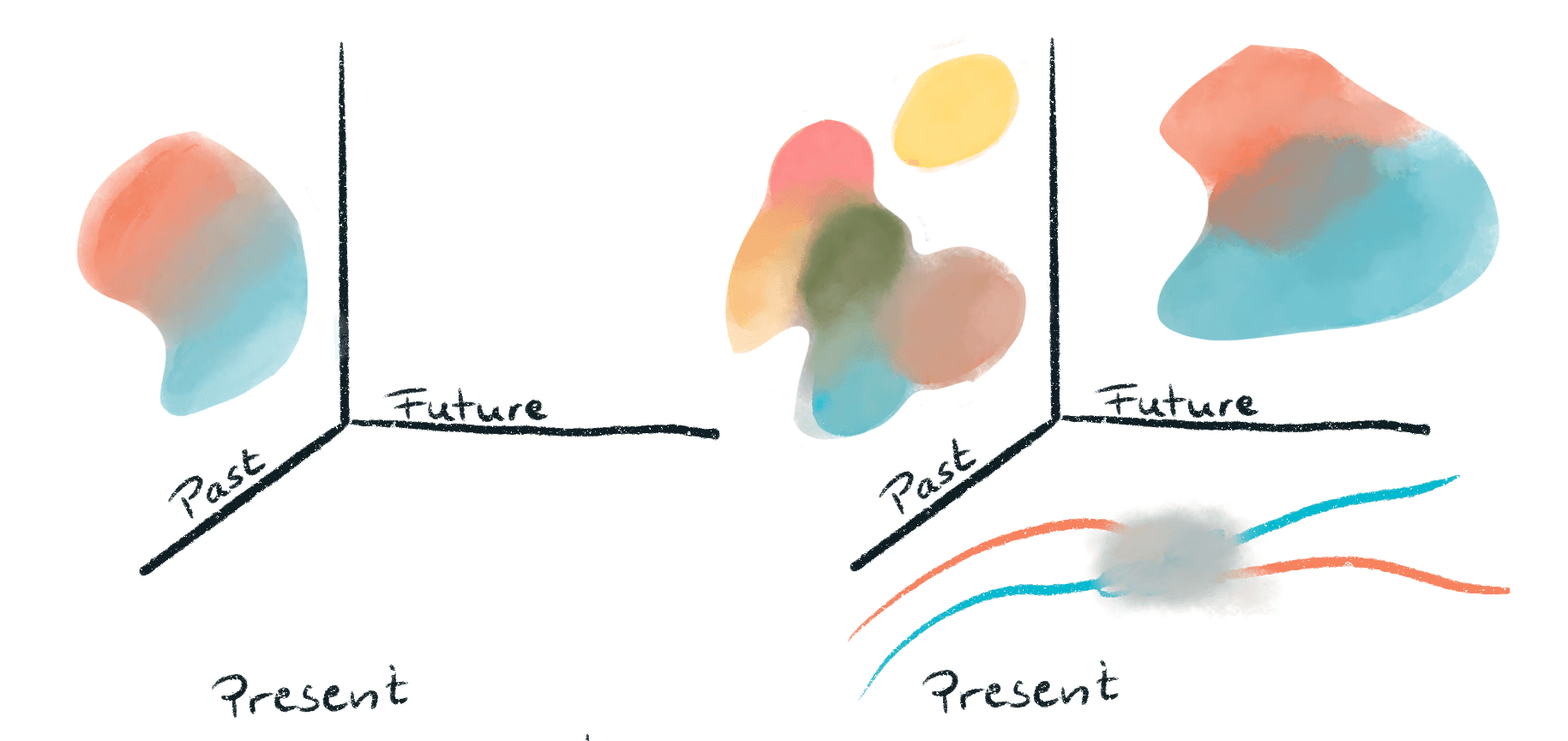
As it was a complex idea, we decided to focus on the floor visual, the main interactive part.
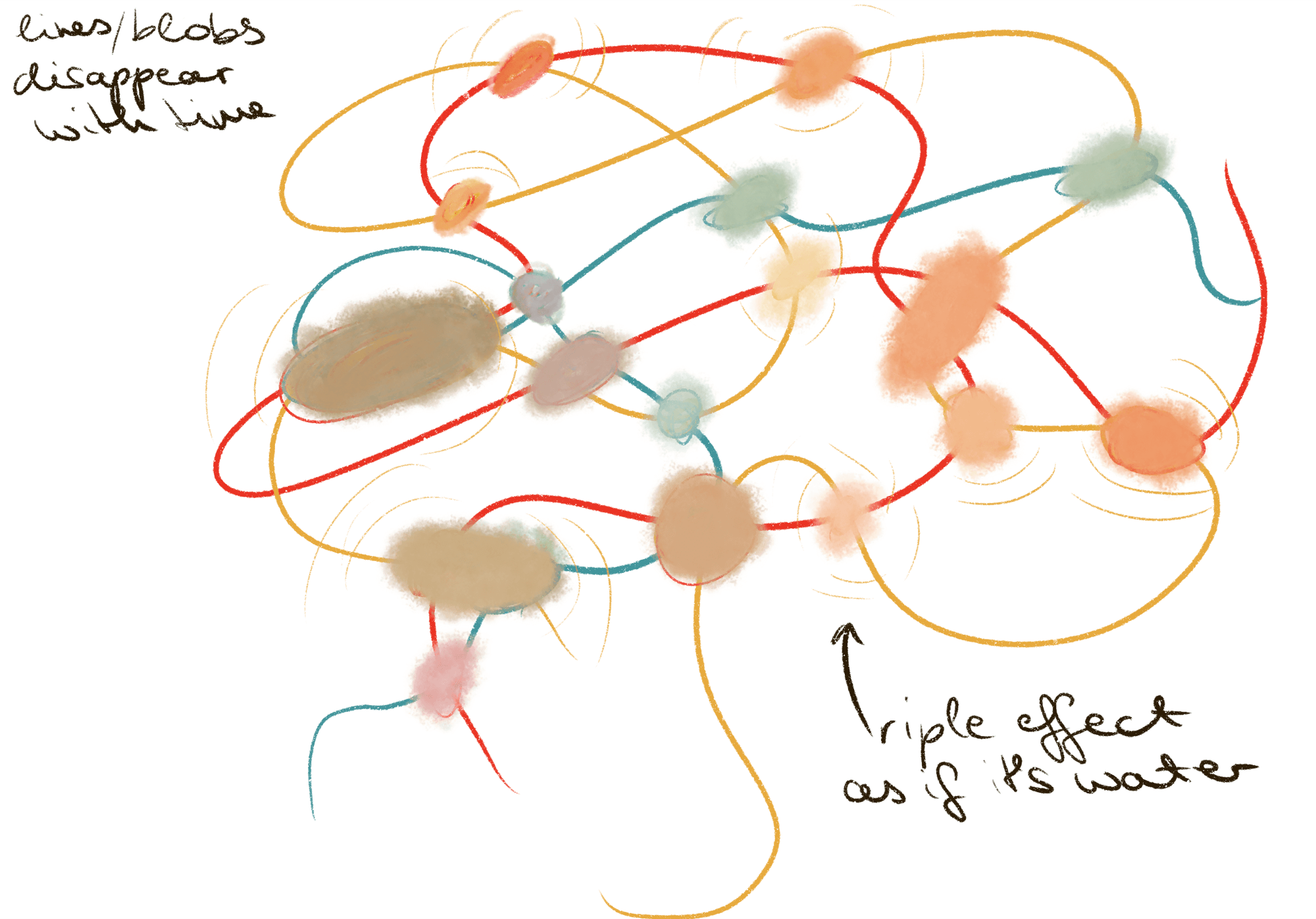
Implementation and challenges
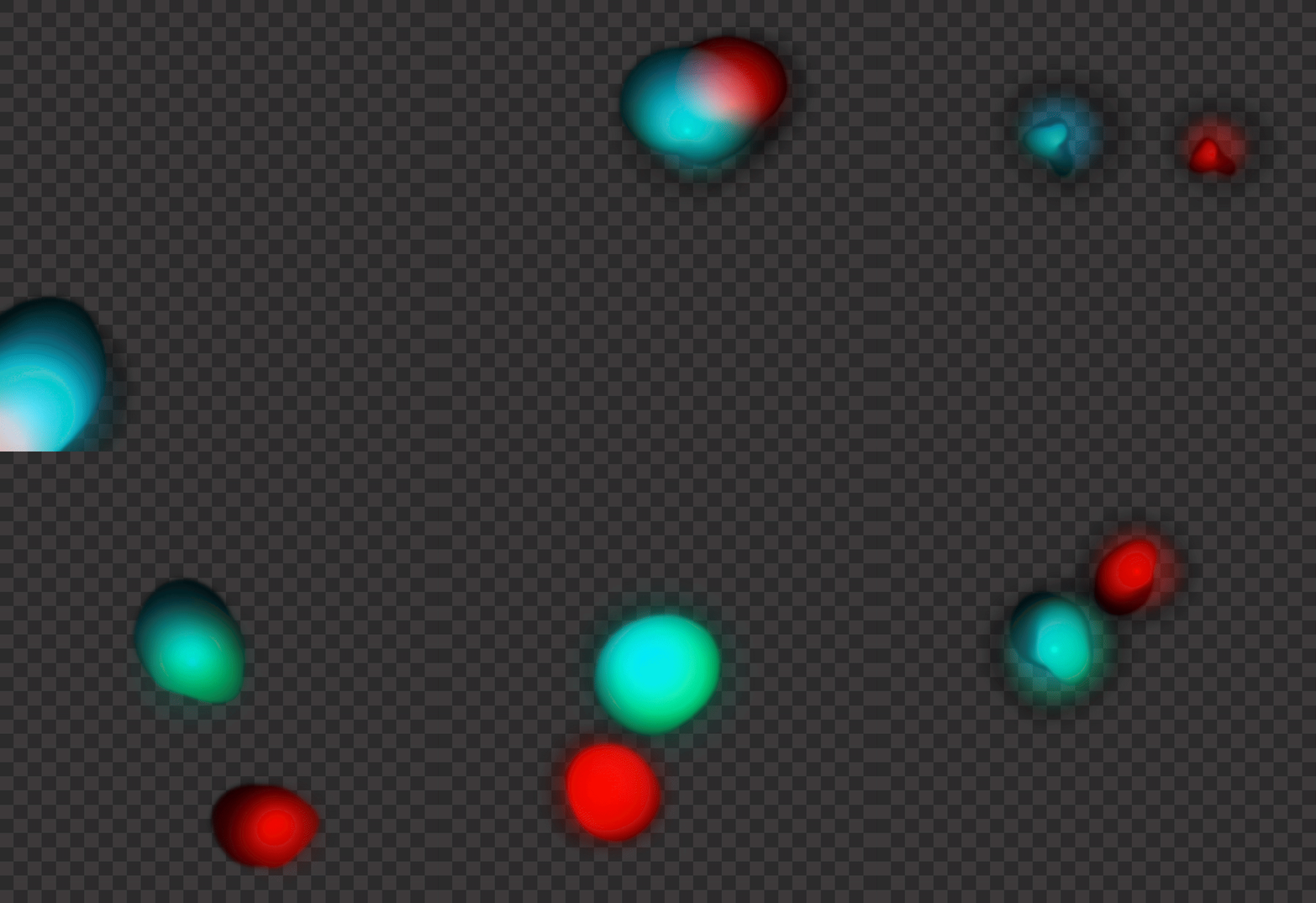
First I worked on the blob, making it look natural with a colour gradient, and came up with different ways of fusing blobs together.
Meanwhile, the others worked on making the trail and tracking people. We ran into many tracking problems and tried to solve them together.
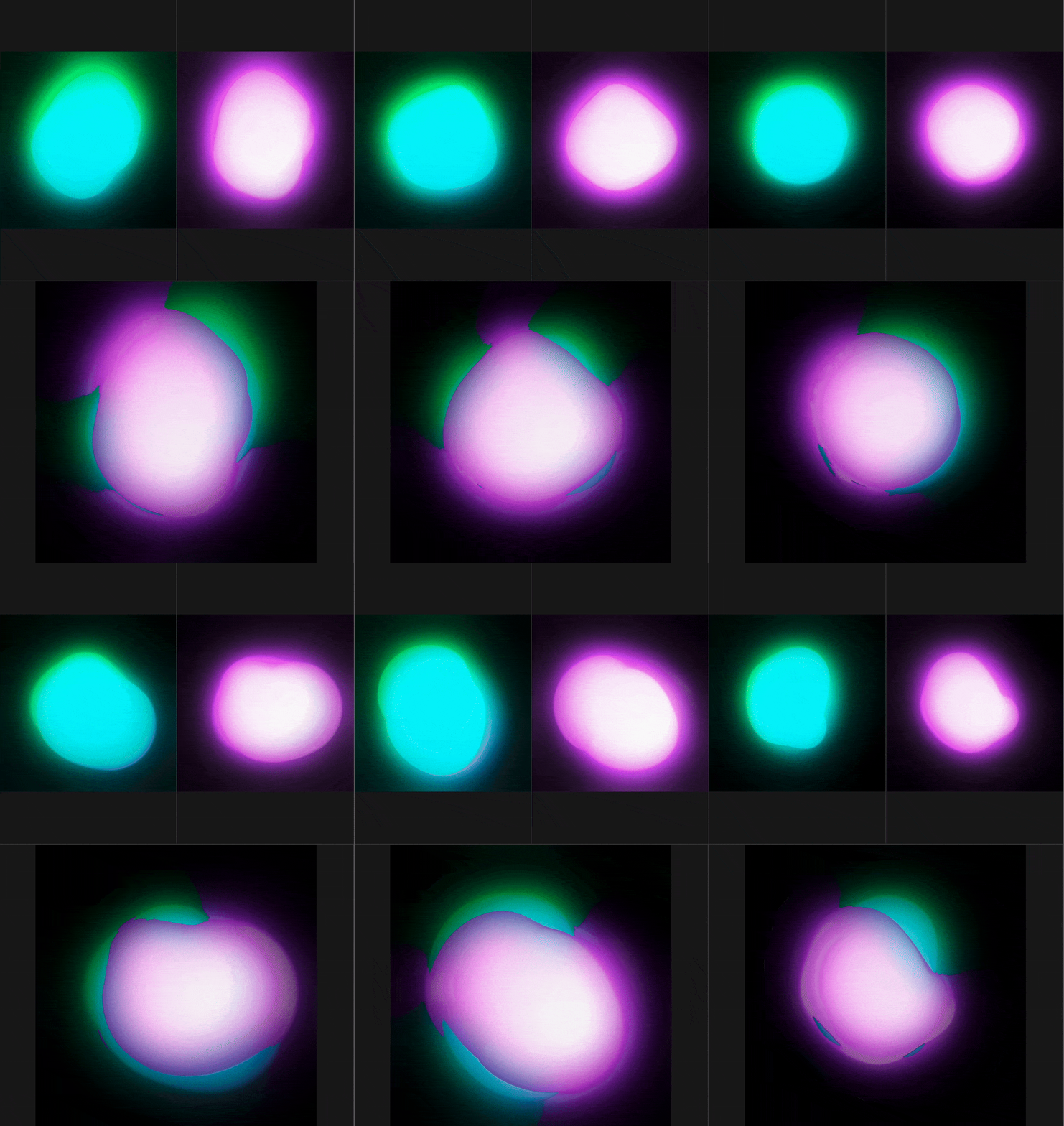
- ProblemsPeople were only recognised if their face was visible, so tracking from above wasn’t possible. The tracking was noisy and not continuous, and we had limited coding experience.
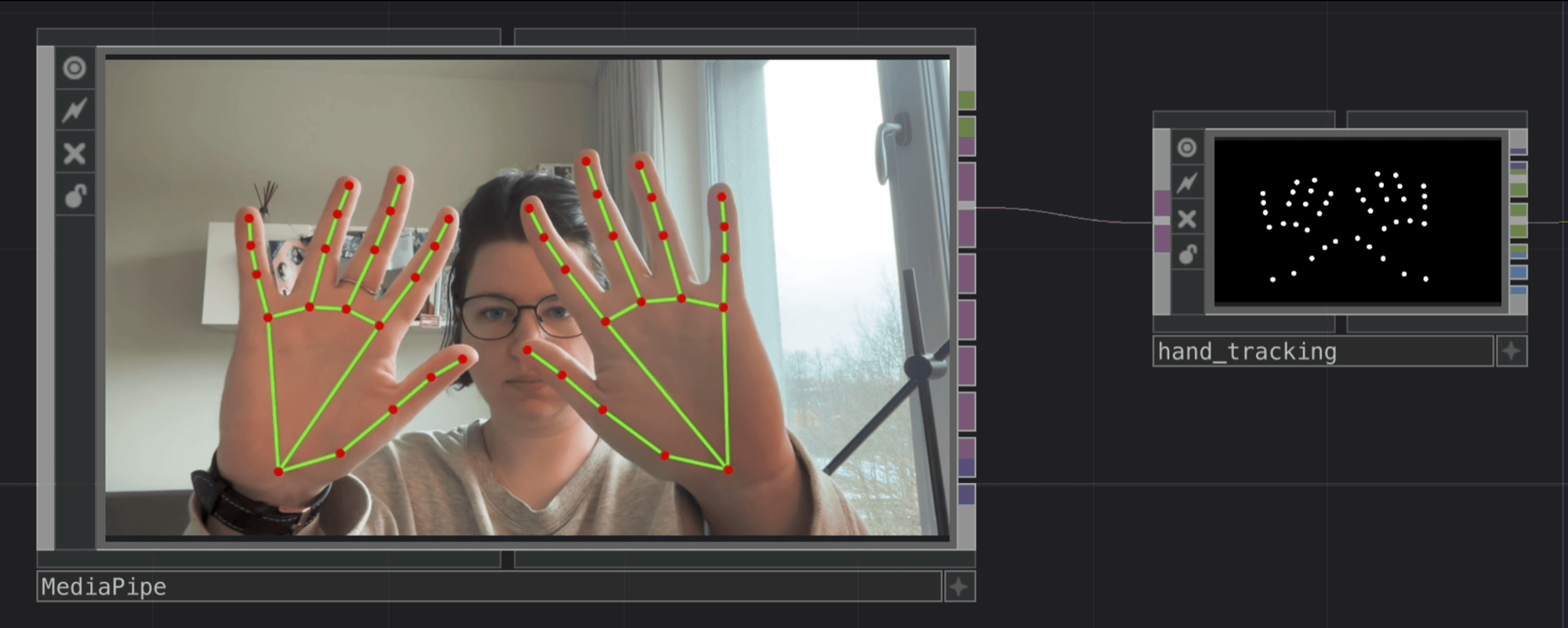
- Technologies we triedCoding (OpenCV), manual tracking, blob tracking and the MediaPipe plugin.
In the end we chose a solution where the hand becomes the walking person, using the MediaPipe plugin for TouchDesigner. Here is how the tracking works:
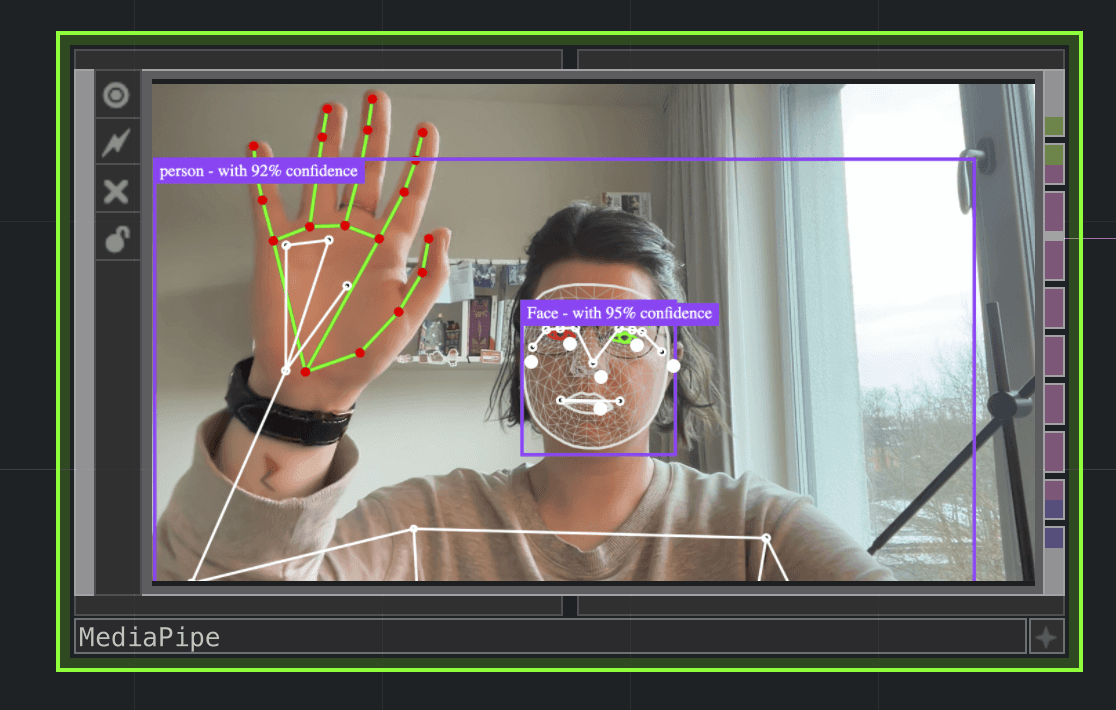
And here is our blob with the tracking and trail added:

Result
The final installation became a playful little game that responds to hands, and on collision makes a rainbow effect and a sound. Two people can use it together to play with each other.
Conclusion
This project stretched our skills and problem solving, as we hit walls multiple times. Our team collaboration was great: we helped each other technically and morally, took over when someone was too stressed by a task, and stayed flexible and open at all times.
The experience was fun, emotional and eye-opening, and I'm really grateful to have learned TouchDesigner, a really fun software to play around with.